Product Ownership in Practice: Designing Elo at Subvisual
Written by

Chapter
Share article
Category
The Scope: Defining the Internal Financial Experience
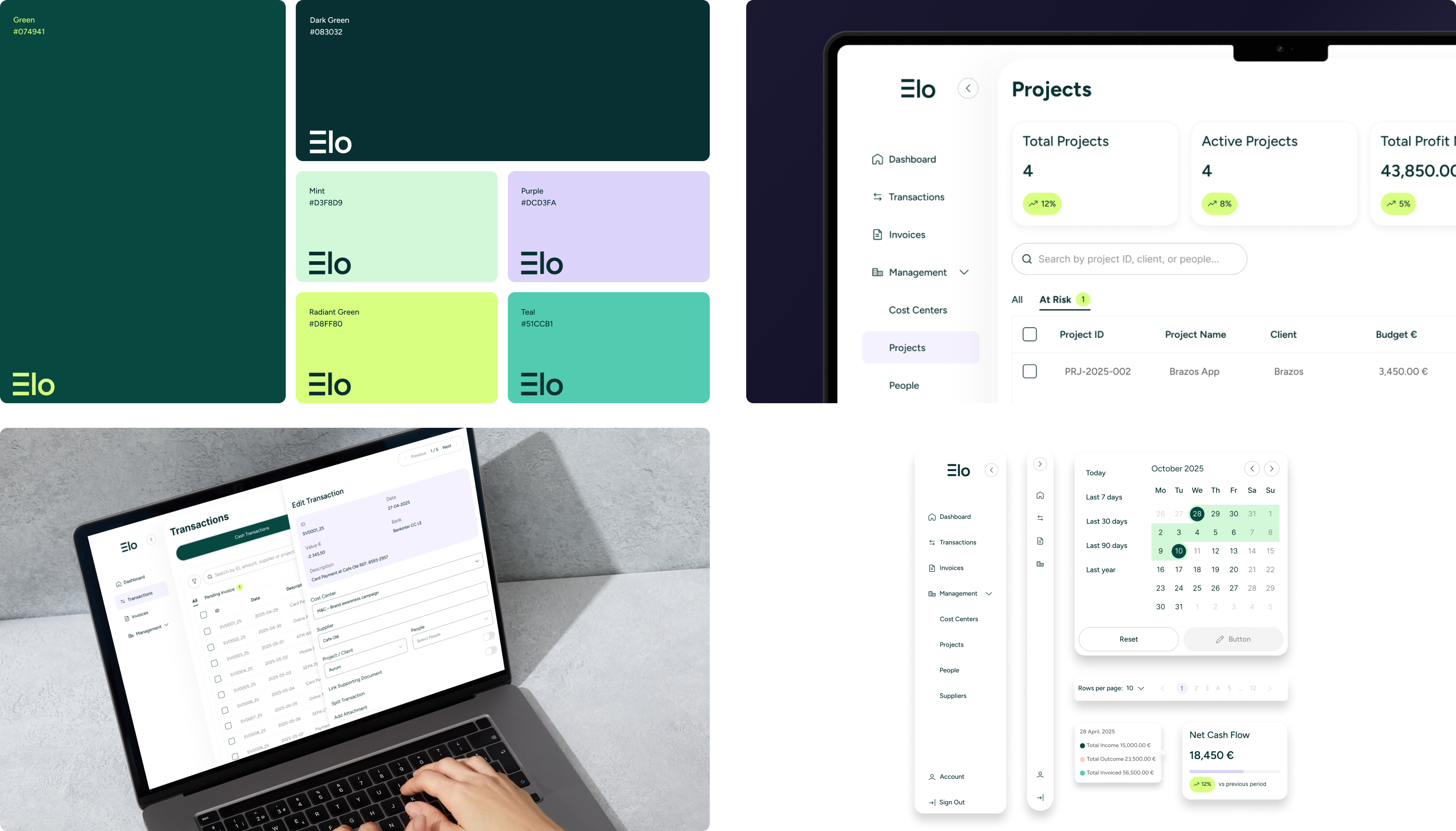
Entering the 10-week Product Design apprenticeship at Subvisual in 2025, the mandate was clear: move beyond theoretical exercises and take full ownership of Elo – an internal web app designed to centralise and manage the financial health of the organisation.
Technically, Elo needed to aggregate complex data from across the company’s finance and leadership teams. Culturally, it had to embody the Subvisual identity – a balance of high-stakes precision and a spirited, collaborative environment. My task was to design an end-to-end product experience, ensuring the platform felt as integrated into the company culture as the people using it.
Navigating the Unknown: A Culture of Learning
As my first venture into a Web3-adjacent product, I initially felt out of my depth. Designing an internal tool for a specialised industry requires a deep understanding of unfamiliar product patterns and crypto-specific workflows. However, the Subvisual environment is built for this type of growth.
The culture is intentionally flat; there were no barriers between the rest of the team and me. Having the company’s collective expertise at my disposal ensured that my learning was supported by a diverse range of perspectives, and I was encouraged to ask questions that pushed my development. This inclusive, learning-focused atmosphere meant that “not knowing” wasn’t a blocker – it was the starting point for research into the emerging patterns of the Web3 landscape.
Solving for Complexity through Role-Based Design
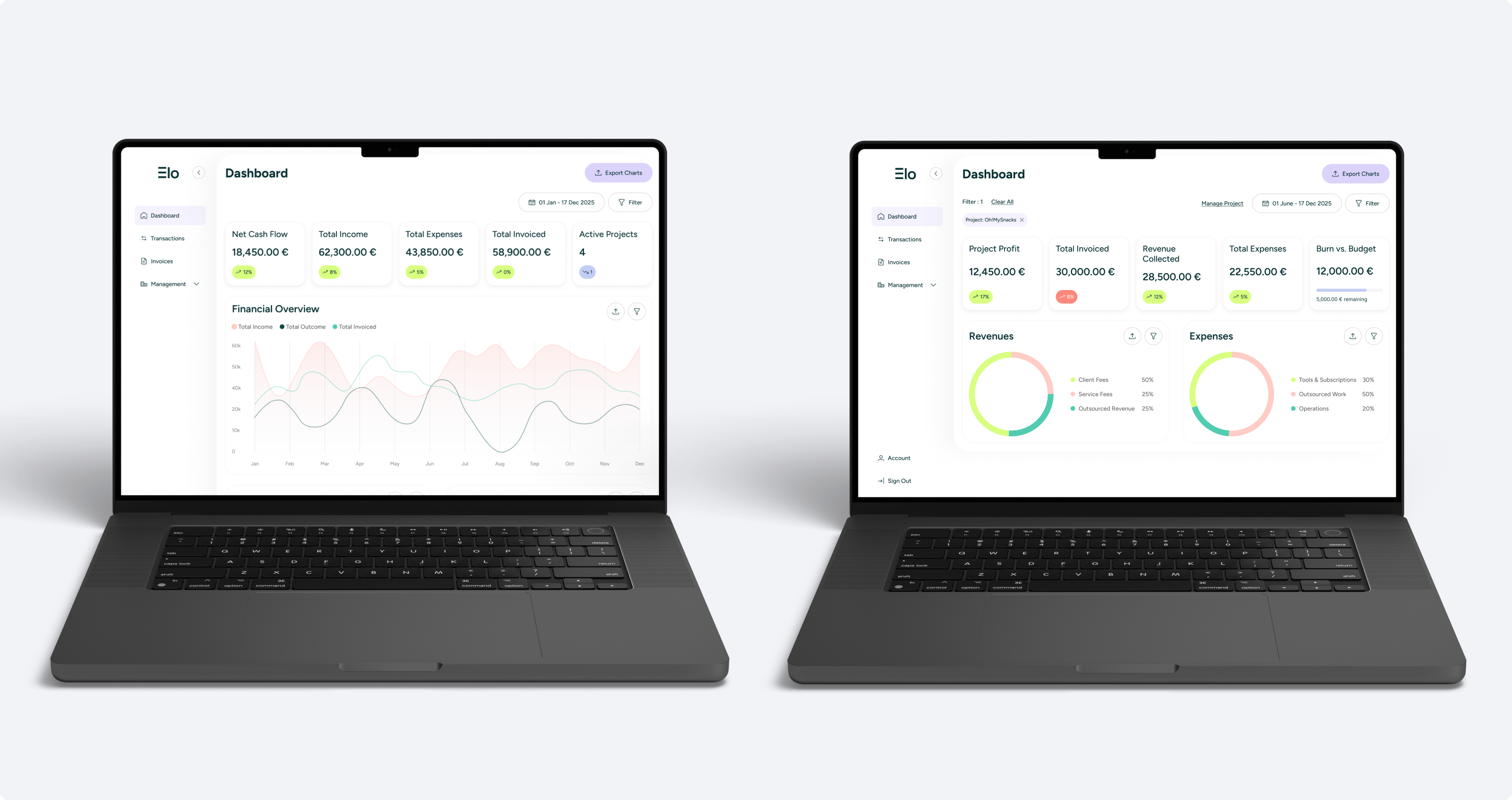
The primary friction point identified during research was the diverse needs of Elo’s stakeholders. Users in finance, management, and operations all interact with financial data through different lenses. A static, one-size-fits-all dashboard would inevitably create information overload for some and data gaps for others.
To solve this, I began exploring the concept of Dynamic Workflows. In a world increasingly augmented by AI, the “Static Dashboard” is becoming a relic. Instead, I looked at how an interface can assemble itself based on the user’s specific responsibilities and the urgency of the data:
- For Finance: The interface prioritises cash flow forecasting, reconciliation, and high-level anomalies.
- For Operations & Management: The focus shifts to project burn rates and resource allocation.
By implementing this level of dynamism, the platform moves from being a passive data repository to an active tool that guides decision-making. In a forward-thinking environment, this paves the way for AI-driven generative interfaces – where the UI proactively assembles itself to highlight critical information before a user even begins their search.
Embracing Reality: Designing for Imperfect Data
The most significant shift in my design philosophy occurred while working closely with the engineering team and mentor. This collaboration reinforced that technical constraints are not blockers, but tools that sharpen decision-making.
I learned the importance of simplifying and prioritising core workflows over absolute completeness, even when pressure exists to add more features. By understanding the technical “how,” I could better advocate for the “why” in my design choices. This experience shifted my mindset from executing tasks to owning product judgment under uncertainty.
This transition was particularly evident when dealing with the “Dirty Reality” of Financial Data. As designers, we are taught to crave the “Happy Path” – clean data and instant feedback. However, financial reality is rarely clean. Data is often delayed, inconsistent, or missing.
My mentor’s advice was pivotal: Good UX doesn’t try to hide uncertainty; it supports people in working through it. For Elo, this meant moving away from “perfect” dashboards toward a UI that provides clarity and guardrails. If a transaction is pending or data is incomplete, the interface communicates the state of that data proactively, giving the user the confidence to make decisions despite the gaps.
Reflection: Beyond the Interface
Looking back, what was most meaningful wasn’t just the final walkthrough of the platform, but the environment that shaped it. Subvisual’s culture of radical support and curiosity allowed me to transition from designing screens to designing systems.
The Portuguese tech landscape is quickly evolving, and there is an increasing need for designers who can act as strategic partners within complex technical ecosystems. My 10-week apprenticeship proved that when you combine a driven, inclusive culture with high-stakes ownership, the result is more than just a functional product – it’s a transformative leap in professional growth.
To see the full process, research, and final walkthrough of this project, you can view the Elo Case Study here.
We run these apprenticeships regularly.
Take a look: https://jobs.subvisual.com/academy