
ethui
We built the Ethereum developer tool we wished existed. Then the community showed up.
ethui is an open-source Ethereum developer toolkit that fills the gap between your code editor and the blockchain. It's a desktop-native wallet built in Rust with Tauri, designed for developers who use Foundry or Hardhat daily. We built it because nothing else existed.
Scratching our own itch
Subvisual built ethui because the existing Ethereum developer wallets—MetaMask included—weren't designed for local development workflows. Local testnets go offline constantly, nonces desync, and when we started developing ethui, MetaMask just didn't cope.
Miguel dug into the MetaMask codebase. No clear solution. Snaps couldn't solve it either. He tried building a browser extension from scratch—and learned the hard way why MetaMask is so complex.
Then Gabriel suggested: why not a desktop app? Tauri existed. Rust was already in the toolkit. The constraints that made browser extensions painful just didn't apply.
Unlike MetaMask, Rabby, or Frame, ethui is aware of your entire Foundry development environment—not just your transactions. It watches your filesystem (within your permissions), detects contract deploys via transaction traces, and matches on-chain bytecode against your local compilation artifacts automatically.
No other Ethereum wallet or developer tool does this. Your wallet doesn't know you just compiled a contract. It can't show you the ABI for the contract you deployed a second ago. ethui can.
Scratching our own itch
Subvisual built ethui because the existing Ethereum developer wallets—MetaMask included—weren't designed for local development workflows. Local testnets go offline constantly, nonces desync, and when we started developing ethui, MetaMask just didn't cope.
Miguel dug into the MetaMask codebase. No clear solution. Snaps couldn't solve it either. He tried building a browser extension from scratch—and learned the hard way why MetaMask is so complex.
Then Gabriel suggested: why not a desktop app? Tauri existed. Rust was already in the toolkit. The constraints that made browser extensions painful just didn't apply.
"Our wallet is what sits between us and a blockchain. As developers, we need it to be helpful, not a hindrance."
Your wallet should know your workflow
Unlike MetaMask, Rabby, or Frame, ethui is aware of your entire Foundry development environment—not just your transactions. It watches your filesystem (within your permissions), detects contract deploys via transaction traces, and matches on-chain bytecode against your local compilation artifacts automatically.
No other Ethereum wallet or developer tool does this. Your wallet doesn't know you just compiled a contract. It can't show you the ABI for the contract you deployed a second ago. ethui can.
"All of those workflows we usually did relying on third-party tools, we're now able to do them fully locally and share them with the team."
"All of those workflows we usually did relying on third-party tools, we're now able to do them fully locally and share them with the team."
How it actually works
ethui is built on a Rust backend paired with a React frontend, using Tauri for desktop app support. The business logic is powered by Foundry, Alloy, Reth, and a collection of other Rust packages, while Rust handles chain syncing, filesystem watching, transaction tracing, and bytecode matching. This makes ethui significantly faster than browser-extension-based alternatives for local Ethereum development.
For contract identification, ethui uses optimistic filesystem matching: it compares compiled artifacts from the developer's local filesystem with deployed bytecode byte-by-byte. A difference of under 10% means it's a match. Immutable variables cause byte-level diffs, but contract logic keeps the score low. No formal contract verification needed — just a reliable convenience heuristic for the developer's own code.
Anvil-aware syncing
Real-time state updates that survive chain restarts, reverts, and downtime. When anvil comes back, ethui catches up instantly.
Foundry ABI explorer
Filesystem monitoring indexes forge outputs. Matched against on-chain bytecode via diff scoring. A local Etherscan that just works, the moment you deploy.
Fast mode
On anvil with a test wallet, ethui skips confirmations entirely. Transactions are auto-impersonated via cheatcodes—your private key is never decrypted. Faster and safer.
Anvil-aware syncing
Real-time state updates that survive chain restarts, reverts, and downtime. When anvil comes back, ethui catches up instantly.
Foundry ABI explorer
Filesystem monitoring indexes forge outputs. Matched against on-chain bytecode via diff scoring. A local Etherscan that just works, the moment you deploy.
Fast mode
On anvil with a test wallet, ethui skips confirmations entirely. Transactions are auto-impersonated via cheatcodes—your private key is never decrypted. Faster and safer.
Account impersonation for local development
ethui's impersonation feature lets you assume any Ethereum address locally and see exactly what that account would see in your dApp. For frontend developers debugging user-reported issues, this eliminates the need for external tools like Impersonator.xyz.
What surprised us: most developers didn't even know impersonation was possible. Rabby wallet now offers Watch Mode, which allows you to browse any public portfolio using their interface, but this is not ubiquitous and doesn't serve the same purpose.
Account impersonation for local development
ethui's impersonation feature lets you assume any Ethereum address locally and see exactly what that account would see in your dApp. For frontend developers debugging user-reported issues, this eliminates the need for external tools like Impersonator.xyz.
What surprised us: most developers didn't even know impersonation was possible. Rabby wallet now offers Watch Mode, which allows you to browse any public portfolio using their interface, but this is not ubiquitous and doesn't serve the same purpose.
"It's eye-opening to learn that a surprising number of people in the space are not even aware that impersonation is a possibility."
ETH Lisbon
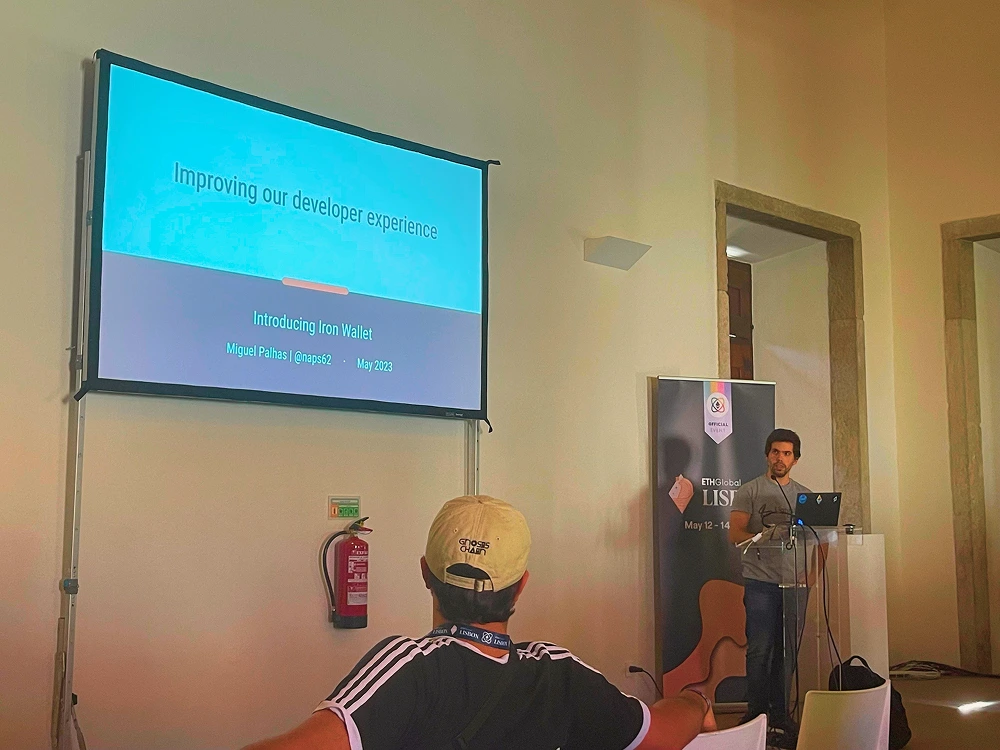
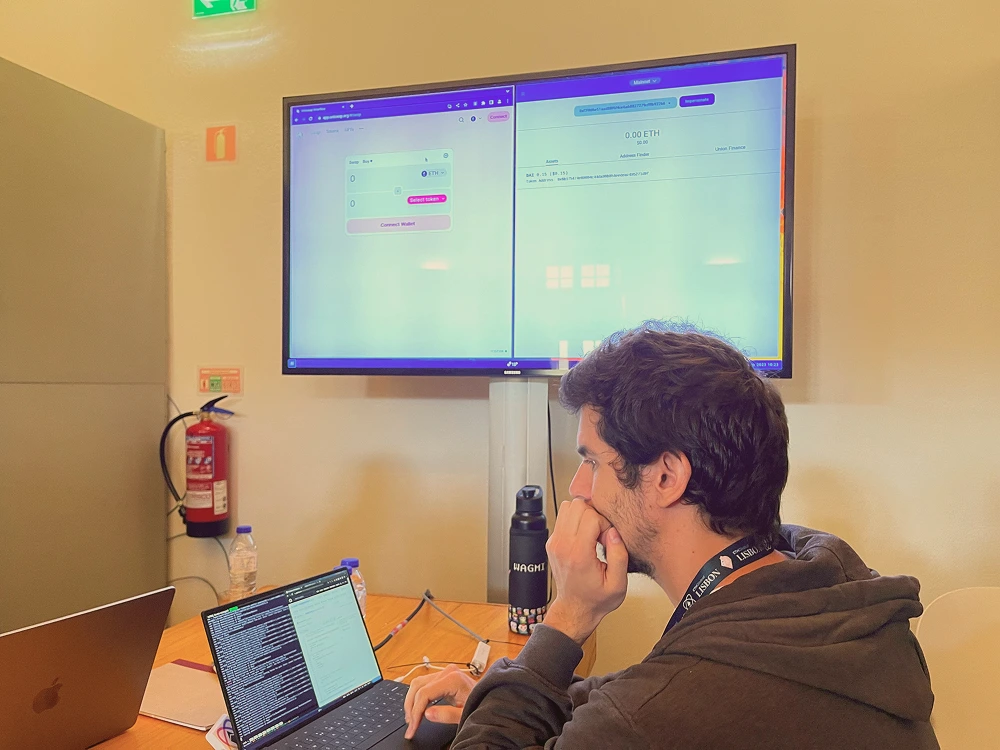
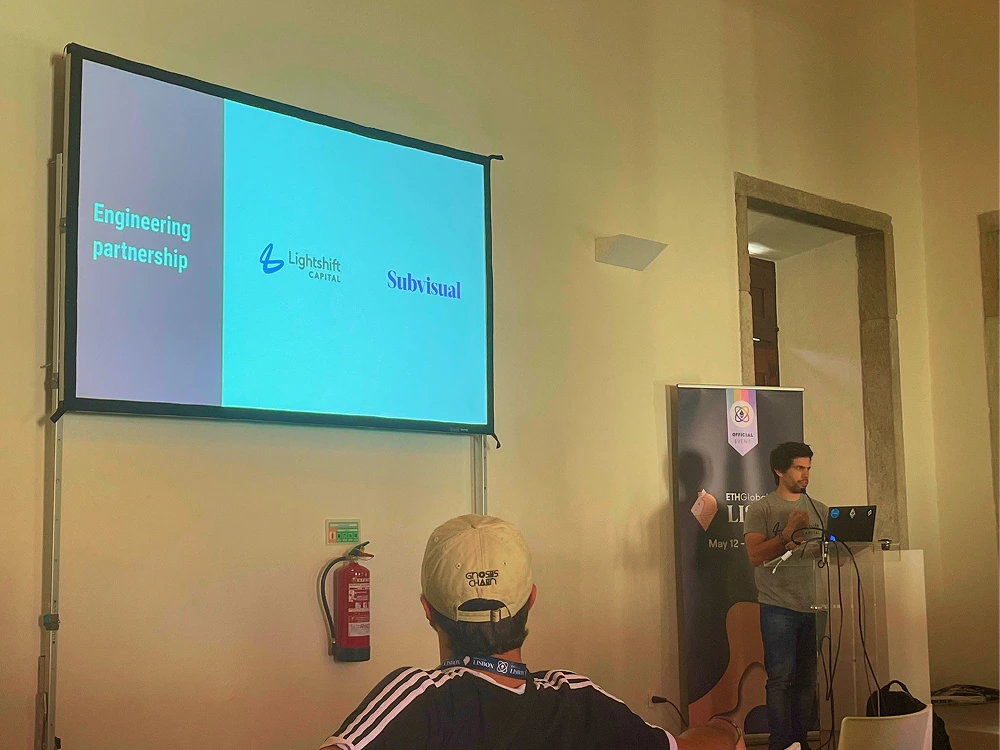
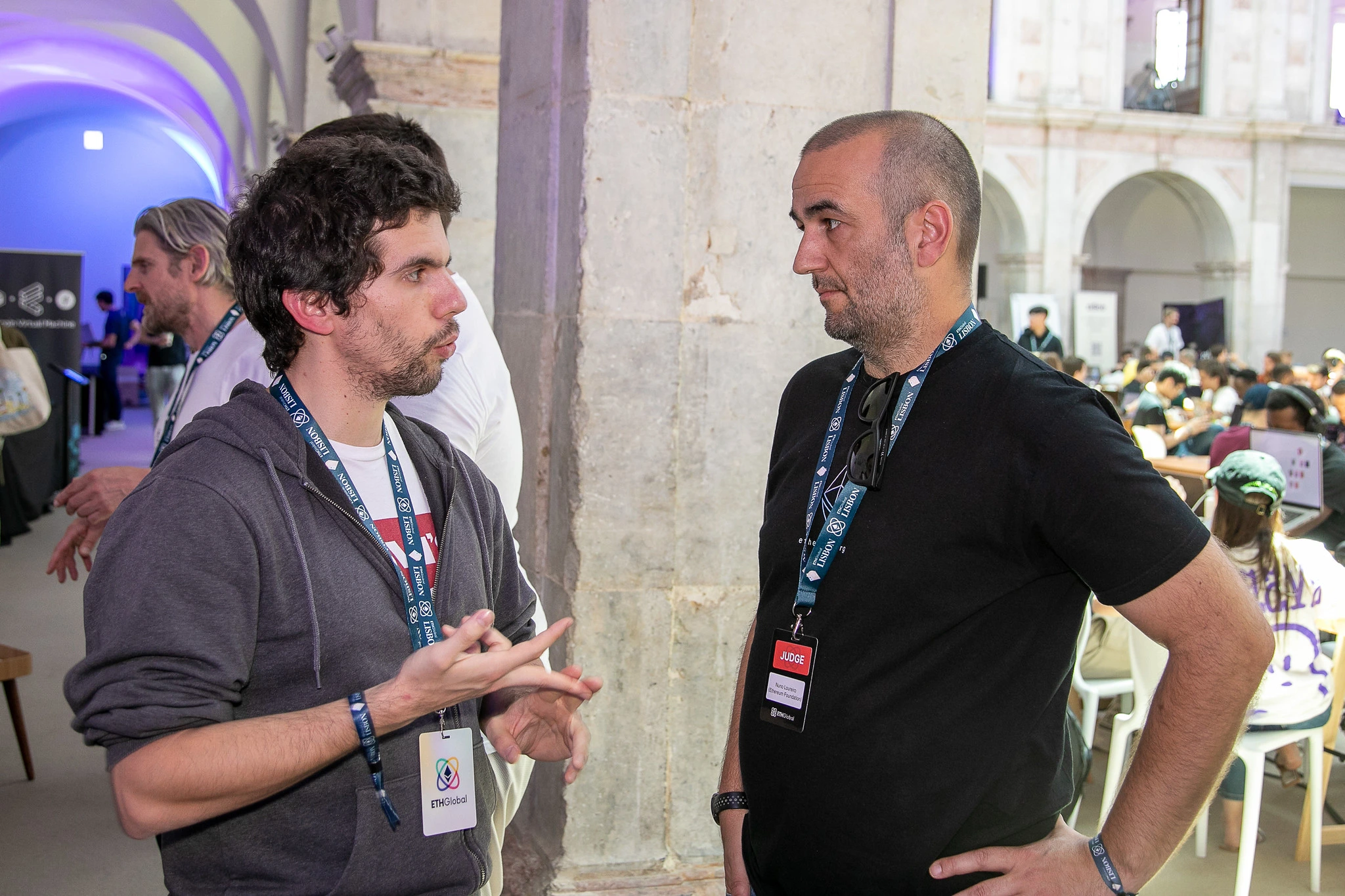
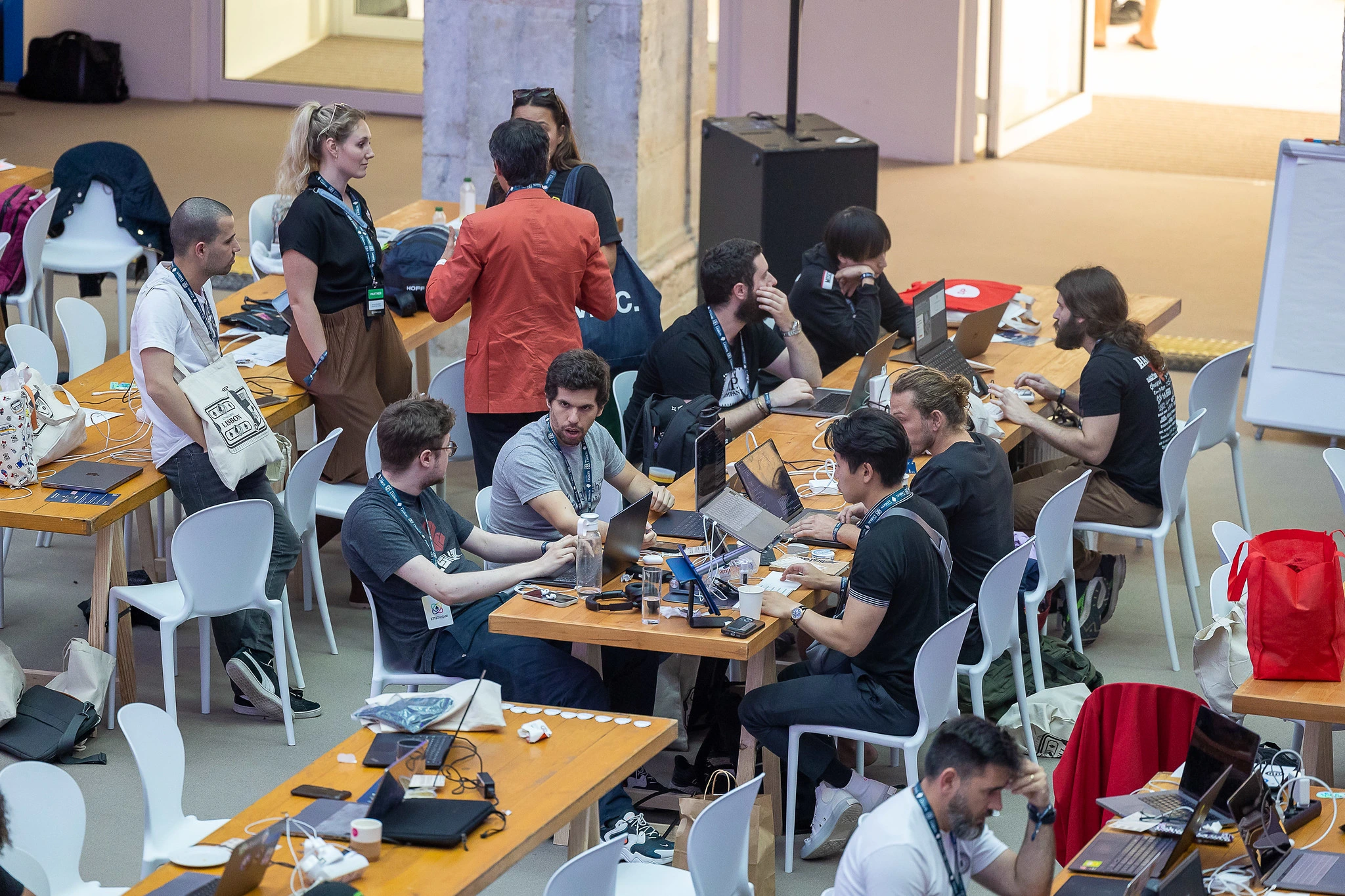
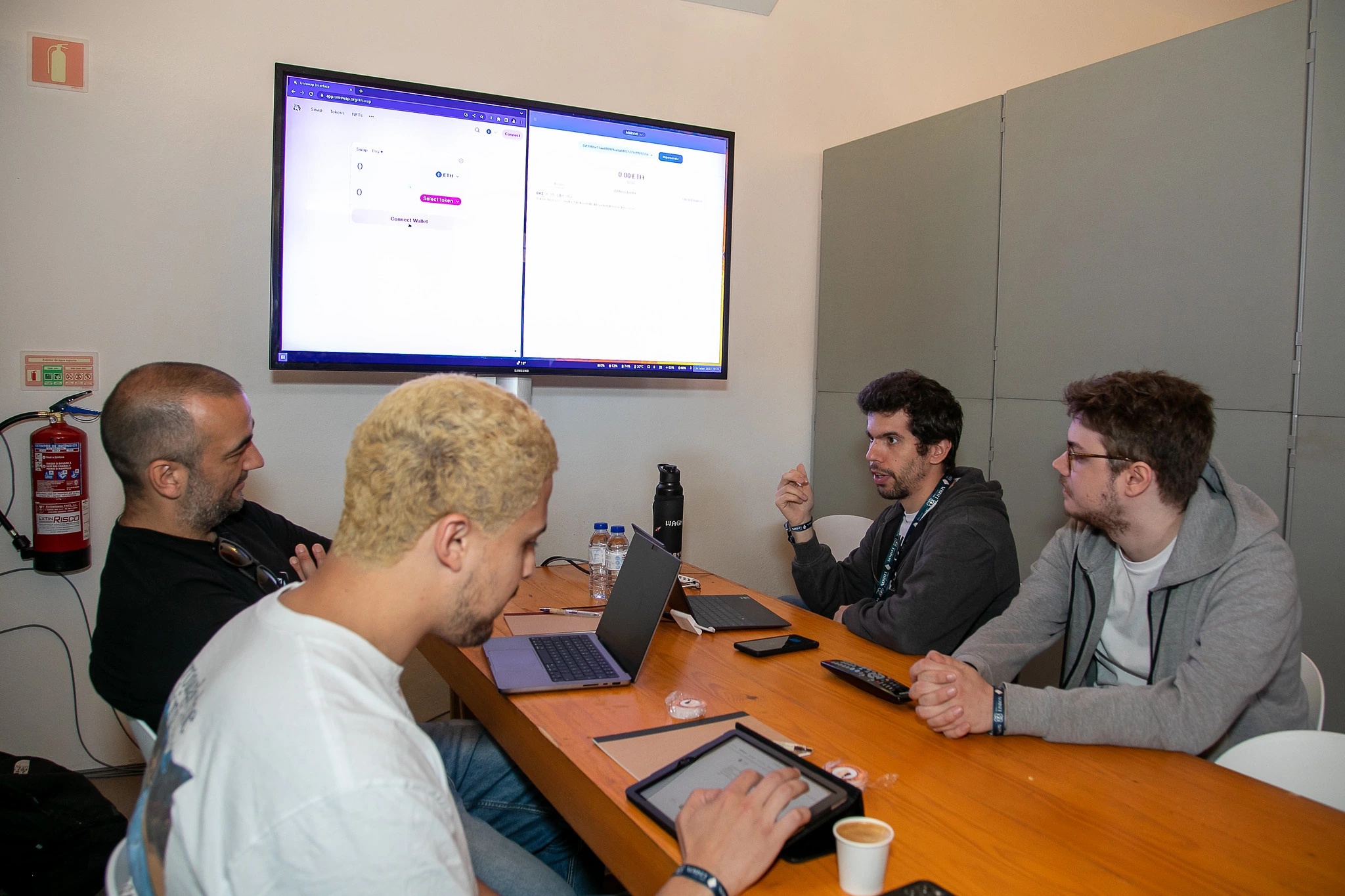
ETH Lisbon was the first time ethui met the wider community. Workshop, speaker slot, bounties for contributions. Real developers, real feedback.
The best thing to come out of it: a PoC for transaction simulations with live updates. Before you submit a tx, see exactly what it will do—decoded logs, state changes, gas. Tenderly's capability, running locally inside your wallet.

ETH Lisbon
ETH Lisbon was the first time ethui met the wider community. Workshop, speaker slot, bounties for contributions. Real developers, real feedback.
The best thing to come out of it: a PoC for transaction simulations with live updates. Before you submit a tx, see exactly what it will do—decoded logs, state changes, gas. Tenderly's capability, running locally inside your wallet.
Iron  ethui
ethui
The project started as Iron. Then a cease-and-desist landed. The rebrand to ethui was quick—the name fits better anyway. "eth" plus "ui." It says what it is.
 ethui
ethuiBy v1.13, Material UI was holding ethui back. The team migrated to a shadcn-based component library. Everything got cleaner—code, UI, and the developer experience of working on ethui itself. macOS-specific tweaks made it feel genuinely native.
This wasn't just cosmetic.
Moving away from Material UI meant the team could build new UI components much faster, without being constrained by an existing design system, and accelerate the next phase of the product.
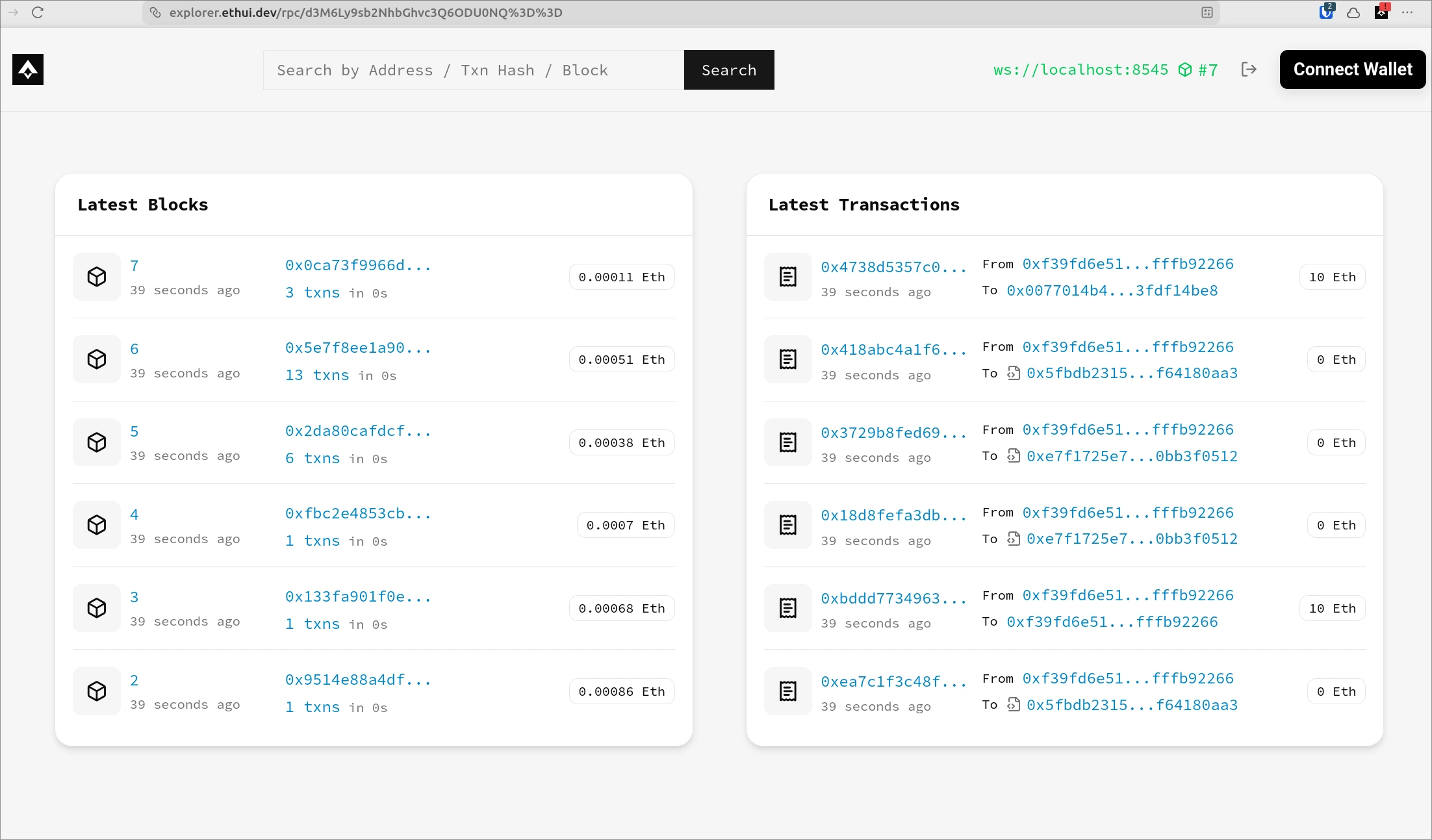
The ethui explorer is a local-first Ethereum block explorer purpose-built for Anvil nodes. Unlike Etherscan (live chains only) or Otterscan (complex setup, read-only), ethui's explorer gives you full read/write contract interaction out of the box.
No verification step. No indexing backend. No Sourcify instance. Connect to any Anvil RPC, and your forge compilation outputs are your verification. It also works with any node supporting the ots_* namespace, including Erigon.
Ironethui
The project started as Iron. Then a cease-and-desist landed. The rebrand to ethui was quick—the name fits better anyway. "eth" plus "ui." It says what it is.
ethuiRipping out the framework
By v1.13, Material UI was holding ethui back. The team migrated to a shadcn-based component library. Everything got cleaner—code, UI, and the developer experience of working on ethui itself. macOS-specific tweaks made it feel genuinely native.
This wasn't just cosmetic.
Moving away from Material UI meant the team could build new UI components much faster, without being constrained by an existing design system, and accelerate the next phase of the product.
A local-first block explorer for Anvil
The ethui explorer is a local-first Ethereum block explorer purpose-built for Anvil nodes. Unlike Etherscan (live chains only) or Otterscan (complex setup, read-only), ethui's explorer gives you full read/write contract interaction out of the box.
No verification step. No indexing backend. No Sourcify instance. Connect to any Anvil RPC, and your forge compilation outputs are your verification. It also works with any node supporting the ots_* namespace, including Erigon.
"This wallet is not just a browser extension but a desktop application, which makes it more powerful."
"This wallet is not just a browser extension but a desktop application, which makes it more powerful."
One-click Ethereum testnets with Stacks
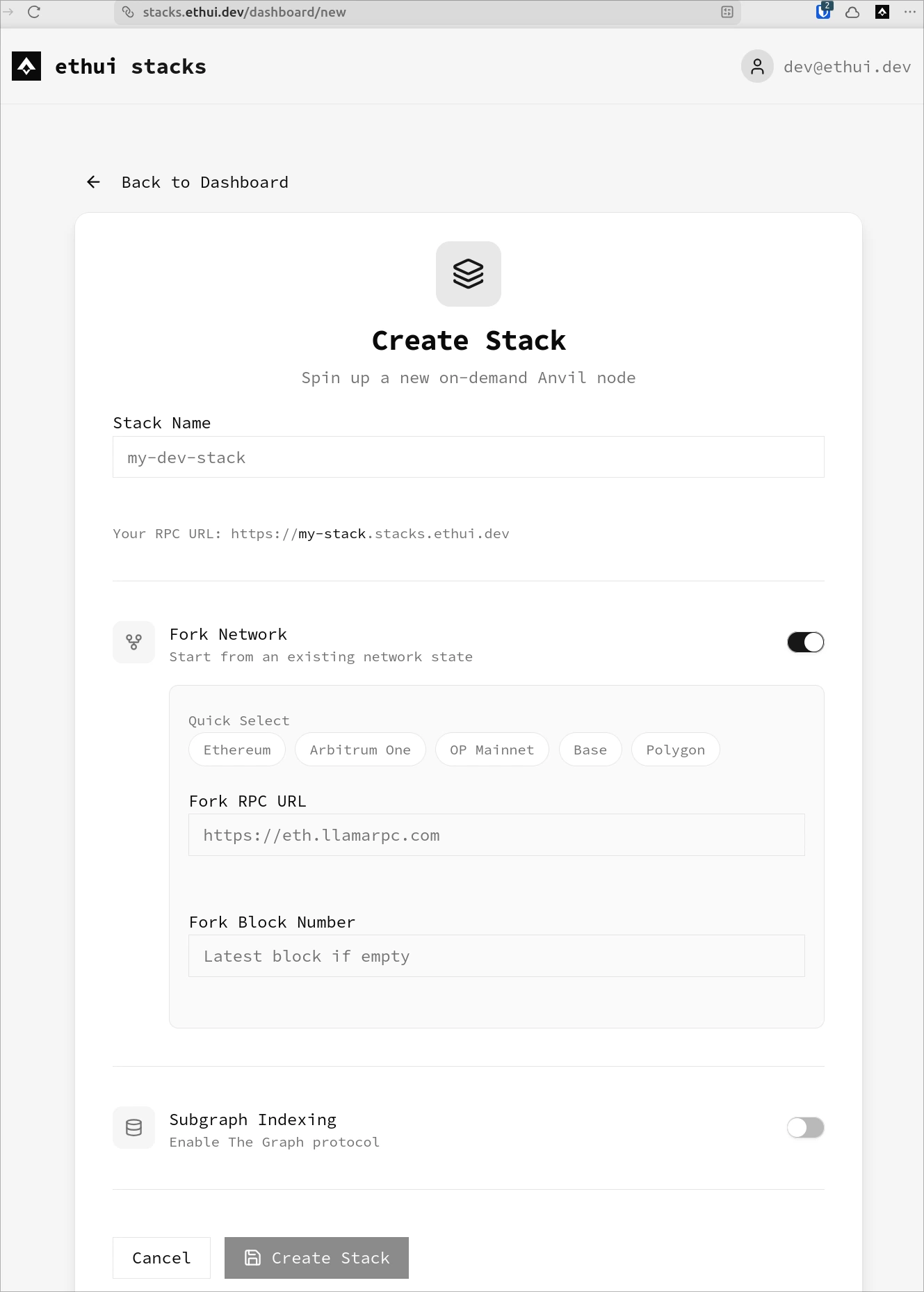
ethui Stacks is a self-hosted tool for creating persistent, cloud-based Anvil testnets in one click. Every project at Subvisual needed the same thing: an Anvil node, a block explorer, a faucet. Stacks packages that into a single setup.
Create a stack, get a persistent remote Anvil instance with a unique chain ID, authenticated RPC URL, and connected explorer. Fork Ethereum mainnet if you want. Share it with your team via a URL. All Anvil cheatcodes work—impersonation, balance setting, snapshots.
Cloud persistence
Your testnet survives machine restarts. Your team can connect from anywhere. Same cheatcodes, zero infrastructure.
Built-in explorer
Every stack gets a connected explorer. No separate setup, no Sourcify. Contract interaction works immediately.
Subgraph support (WIP)
Not just a testnet—the entire tech stack. Subgraph hosting is in progress, with the tricky bit being anvil reverts.
ethui isn't a client project. Nobody asked us to build it. It exists because our lead developer hit a wall and decided to fix it properly. That's the kind of team we are.
When the tools aren't good enough, we build better ones. ethui powers our own workflow on every web3 project—from Quill and Orki to Brazos. Good developer tools should be shared.
"This is the best thing I've ever built."
What we built
A desktop-native Ethereum toolkit. A wallet that understands Foundry. An explorer that works locally. One-click testnet infrastructure. All open-source.
What's next
A fully featured explorer on a Reth execution extension. shadcn-style web3 UI primitives. Automated frontend testing against on-chain state—something still nearly impossible in web3.
One-click Ethereum testnets with Stacks
ethui Stacks is a self-hosted tool for creating persistent, cloud-based Anvil testnets in one click. Every project at Subvisual needed the same thing: an Anvil node, a block explorer, a faucet. Stacks packages that into a single setup.
Create a stack, get a persistent remote Anvil instance with a unique chain ID, authenticated RPC URL, and connected explorer. Fork Ethereum mainnet if you want. Share it with your team via a URL. All Anvil cheatcodes work—impersonation, balance setting, snapshots.
Cloud persistence
Your testnet survives machine restarts. Your team can connect from anywhere. Same cheatcodes, zero infrastructure.
Built-in explorer
Every stack gets a connected explorer. No separate setup, no Sourcify. Contract interaction works immediately.
Subgraph support (WIP)
Not just a testnet—the entire tech stack. Subgraph hosting is in progress, with the tricky bit being anvil reverts.
What this says about Subvisual
ethui isn't a client project. Nobody asked us to build it. It exists because our lead developer hit a wall and decided to fix it properly. That's the kind of team we are.
When the tools aren't good enough, we build better ones. ethui powers our own workflow on every web3 project—from Quill and Orki to Brazos. Good developer tools should be shared.
"This is the best thing I've ever built."
What this says about Subvisual
What we built
A desktop-native Ethereum toolkit. A wallet that understands Foundry. An explorer that works locally. One-click testnet infrastructure. All open-source.
What's next
A fully featured explorer on a Reth execution extension. shadcn-style web3 UI primitives. Automated frontend testing against on-chain state—something still nearly impossible in web3.
Common questions
What is ethui?
ethui is an open-source, desktop-native Ethereum developer toolkit built with Tauri (Rust + React). It provides a Foundry-aware wallet, a local block explorer, contract ABI detection, account impersonation, and one-click cloud testnets via Stacks. It is built and maintained by Subvisual.
How is ethui different from MetaMask?
MetaMask is a browser-extension wallet designed for end users interacting with live chains. ethui is a desktop application designed for developers working with local Foundry/Anvil environments. ethui monitors your filesystem, detects contract deploys automatically, matches bytecode to ABIs without manual verification, and supports developer-specific features like account impersonation and fast mode.
Does ethui work with Foundry and Anvil?
Yes. ethui is built specifically for Foundry workflows. It syncs with Anvil nodes in real time, watches your forge output directory for compiled contracts, and uses bytecode matching to automatically resolve ABIs for deployed contracts. All Anvil cheatcodes—including impersonation and balance setting—work natively.
What is ethui Stacks?
ethui Stacks is a self-hosted tool for creating persistent, cloud-based Anvil testnets. Each stack includes an Anvil node with a unique chain ID, an authenticated RPC URL, a connected block explorer, and a faucet. Stacks support mainnet forking and can be shared with a team via URL.
Is ethui open source?
View on GitHub